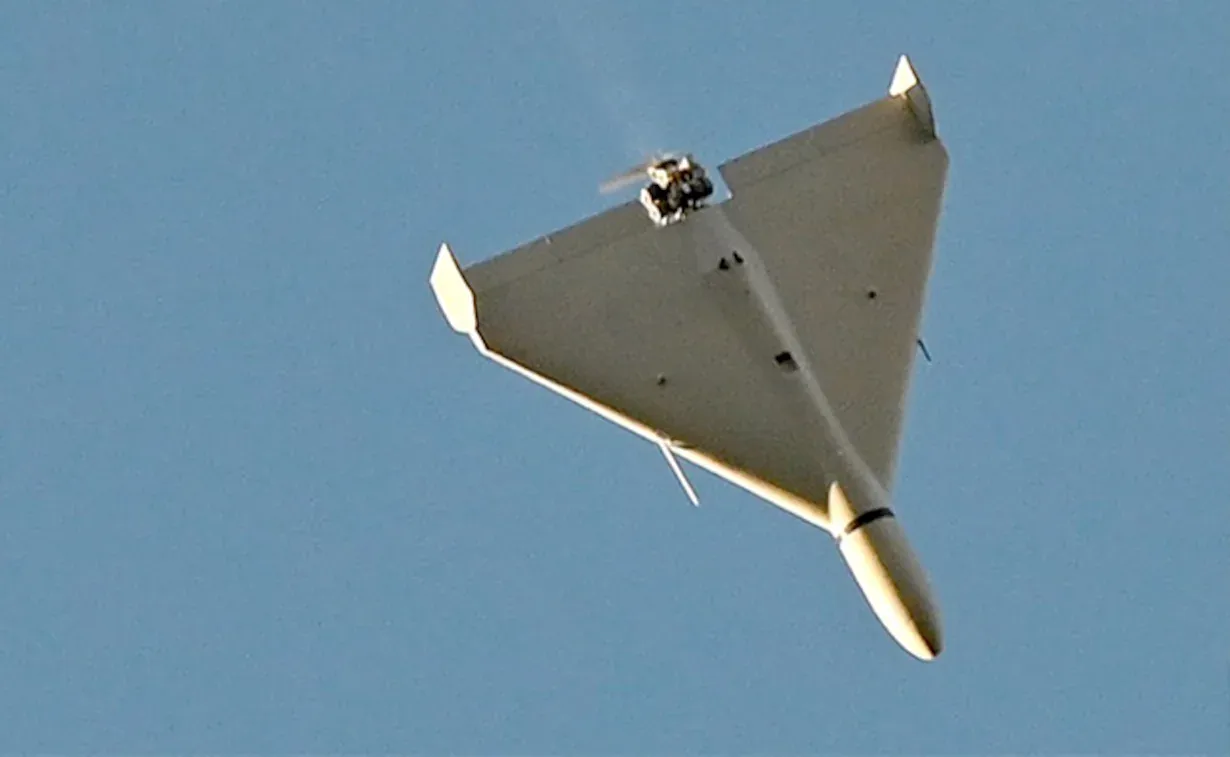
Lessons from Israel: Can India Withstand Such a Drone Attack?



On 13 April, Israel successfully thwarted a massive missile and drone attack from Iran, thanks in part to US support. While Israel claims to have intercepted nearly 99% of the 325+ projectiles, the incident raises a critical question for India:
Could we defend against a similar saturated long-range drone attack from Pakistan or China?
The Challenges of Drone Defense
Drones pose a unique threat due to their low-altitude flight, making them difficult to detect with traditional radar systems. Early warning and real-time information are crucial for effective interception. Israel's success hinged on prior warnings and real-time data shared by its allies, allowing them to deploy their defenses effectively.
India's Defense Capabilities
India possesses a multi-layered defense system, including fighter jets, anti-air artillery, and various missile systems. However, early warning remains a significant challenge. While India has long-range Swordfish radars, their effectiveness in detecting small, low-flying drones is uncertain. Airborne Early Warning and Control Systems (AWACS) can detect drones, but their limited numbers pose a constraint.
A Hypothetical Scenario
Assuming India receives prior warning of an attack, it would need to coordinate its fighter jets, anti-air systems, and soft-kill counter-drone measures. Newer systems like QRSAM, Akash-Prime, and Akash-NG would offer additional protection. However, older Soviet-origin systems have shown limitations in detecting drones in recent conflicts.
Even with successful interception of most drones, some may inevitably penetrate defenses. Additionally, a simultaneous attack involving ballistic and cruise missiles, along with enemy aircraft, would complicate the situation further.
The Scale and Persistence of Attacks
Unlike Israel, India's vast territory poses a unique challenge. Defending against multiple waves of attacks would depend on interceptor stockpiles and the ability to resupply and reload launchers quickly. India's manufacturing ecosystem would need to surge production to replenish these interceptors.
Ultimately, time favors the attacker. Cheap drones can be replenished quickly, while complex and costly missiles are not.India's best option in a prolonged conflict would be to launch its counter-strike.
Implications for India
The recent events in Israel underscore the potential threats India faces. It's imperative that India bolsters its early warning systems, stockpiles interceptors, and invests in long-range missiles as a deterrent. Expediting the establishment of a rocket force could be a crucial step in this direction.
In conclusion, while India possesses the capability to defend against a saturated drone attack, success hinges on early warning, effective coordination, and sufficient resources.
The Israeli experience serves as a reminder that investing in robust defense systems and strategies is vital in today's rapidly evolving warfare landscape.
Jai Hind!
Related Articles
 General
 General
 General